Welcome to Pierre Review
A complete tour of the most powerful way to follow the South Dakota Legislature.
By the Pierre Review team
What is Pierre Review?
Pierre Review tracks everything moving through the South Dakota Legislature: every bill, every roll call, every committee hearing, every dollar in the state budget, and now every interim committee meeting between sessions. It puts the whole picture in one place, in context: where a bill stands, who sponsored it, how the vote went, and what it would actually change in existing law.
What started as a side project has grown into a professional research tool used by lobbyists, associations, local governments, and engaged citizens. This post is a tour of what's on the site today and what to expect when the legislature gavels back in this January.
The dashboard: your daily briefing
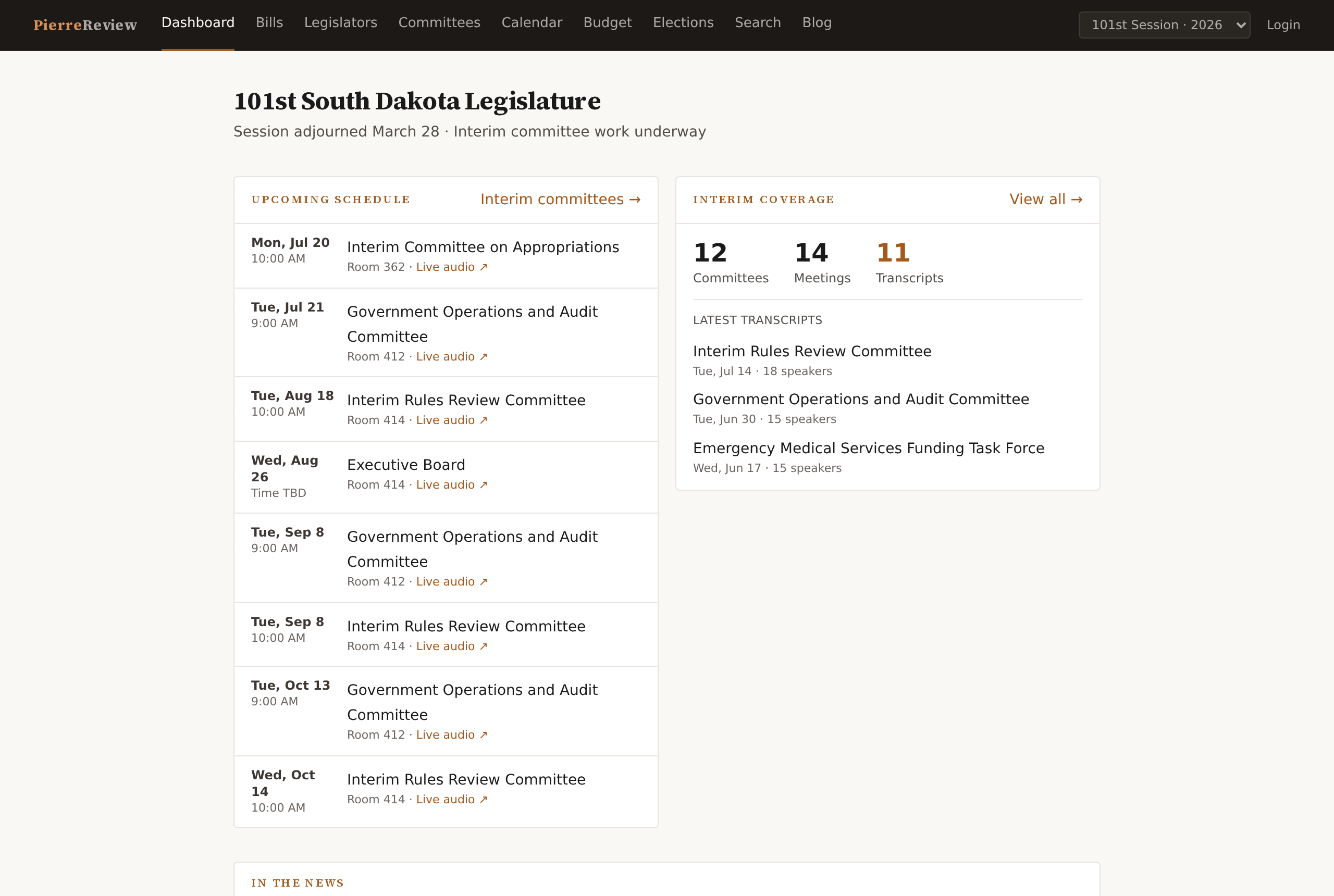
The dashboard is the front page of the legislature. Right now, during the interim, it surfaces upcoming committee meetings, our transcript coverage, the latest South Dakota political news, and daily spotlights on legislators and bills. During session it becomes a live briefing: that day's hearing schedule with live audio links, bills on the move, and session-wide statistics.
Bill tracking: the full pipeline
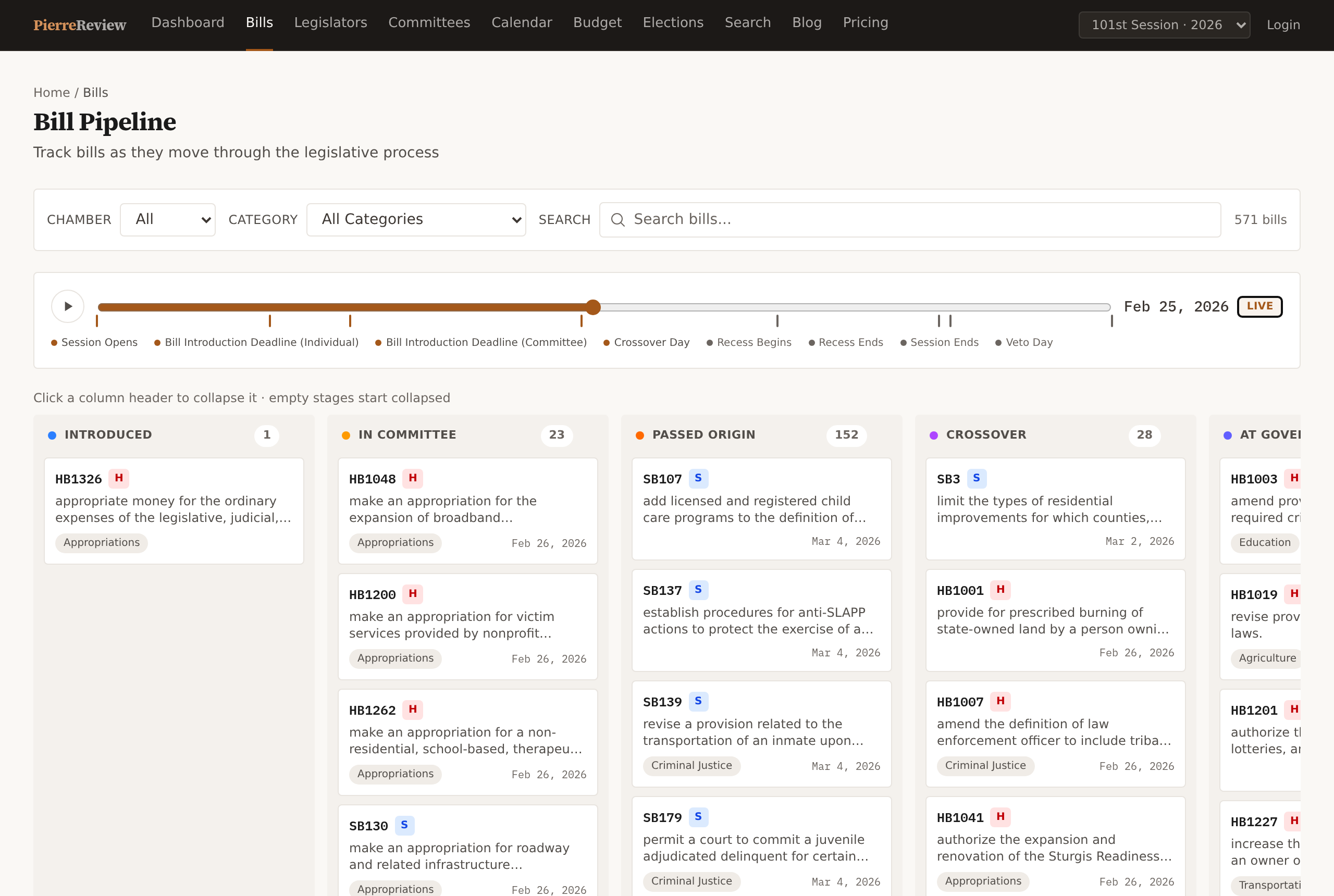
The bill board shows all 571 bills from the 2026 session on a kanban board organized by where they are in the process — from introduction through committee, floor votes, crossover, and the Governor's desk, with failed bills (vetoed, tabled, or dead) gathered in a single lane. Columns collapse out of the way when you don't need them, and a timeline slider lets you scrub back to any day of the session and watch the pipeline evolve — the view below is February 25, the day before crossover. Every bill gets an AI-generated plain-language summary, full sponsor lists, roll-call vote breakdowns, and committee hearing history.
See exactly what a bill changes in state law
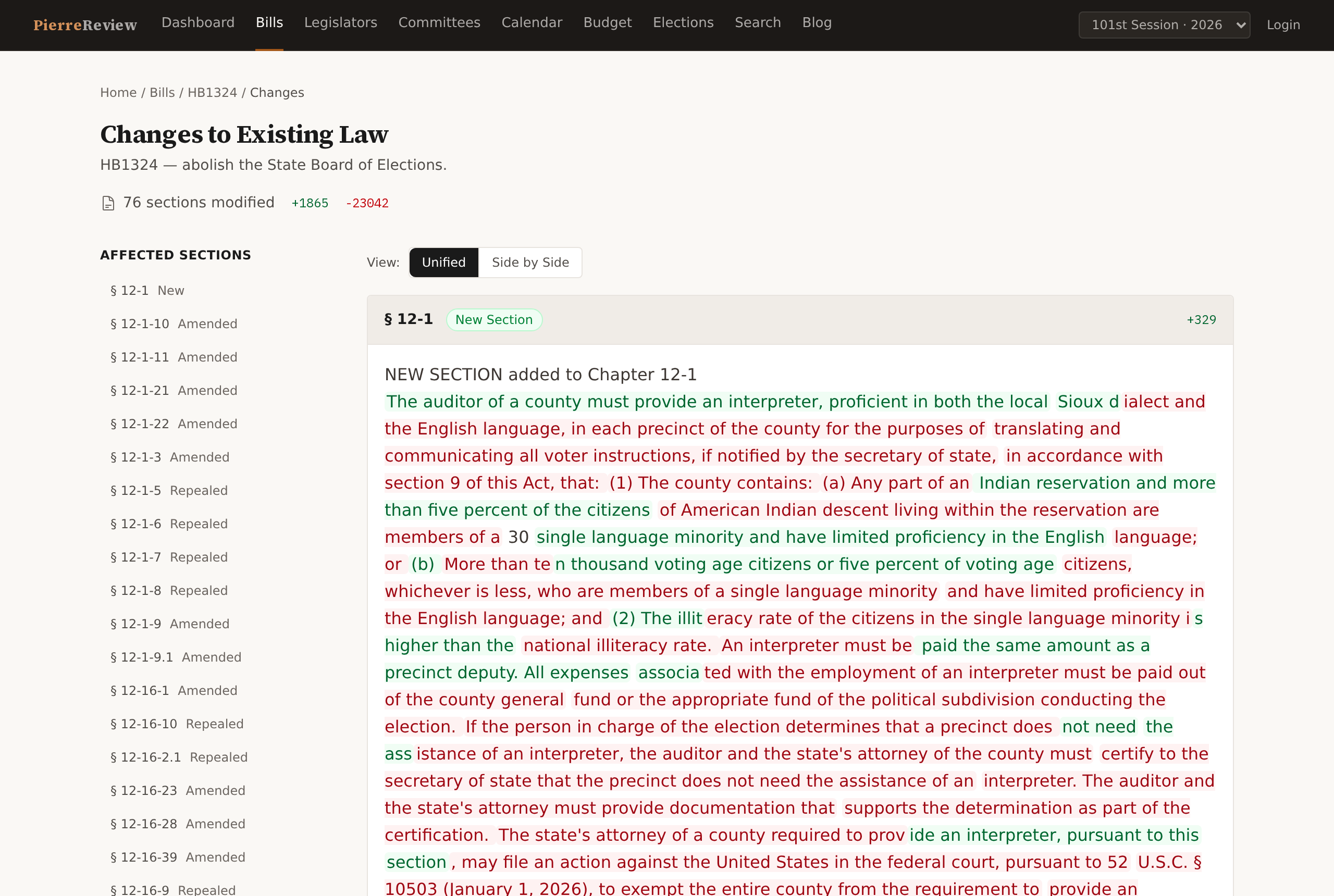
This is the feature we're proudest of. For every bill that amends codified law, we generate a word-level diff against the current statutes — additions in green, deletions in red, section by section, just like a code review. No more squinting at overstruck PDF text to figure out what a 76-section election bill actually does.
Legislator analytics: how they actually vote
Every legislator profile includes the basics — sponsored bills, full voting record, committee assignments — plus an analytics layer that turns thousands of votes into real insight.
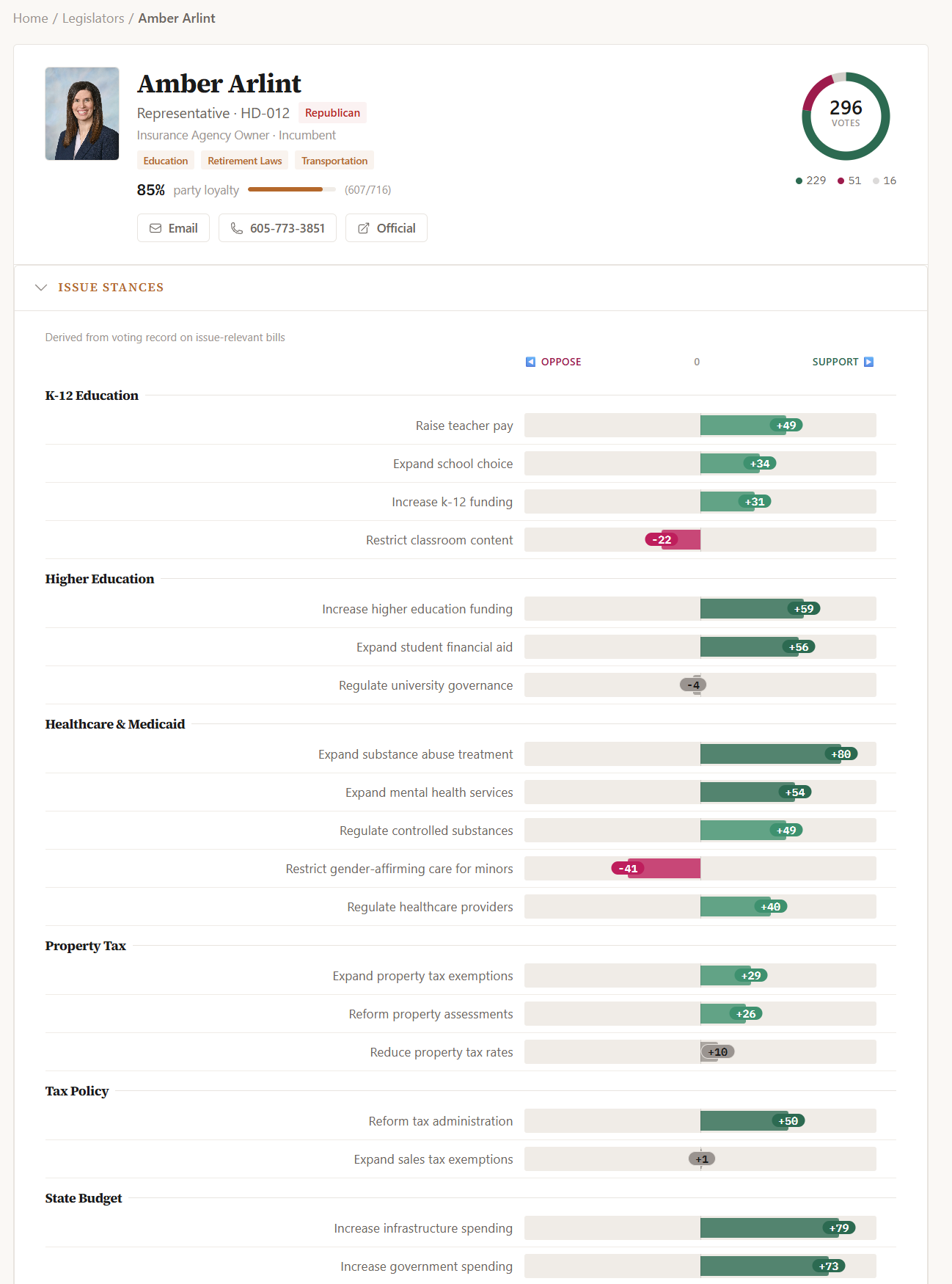
Issue stances place each member on 35 policy categories, from K-12 education to property tax, derived from their actual votes on issue-relevant bills — not their press releases:
Effectiveness scores show who gets bills across the finish line — sponsorship volume, success rate, vote participation, and amendment activity, each ranked by percentile within the chamber:
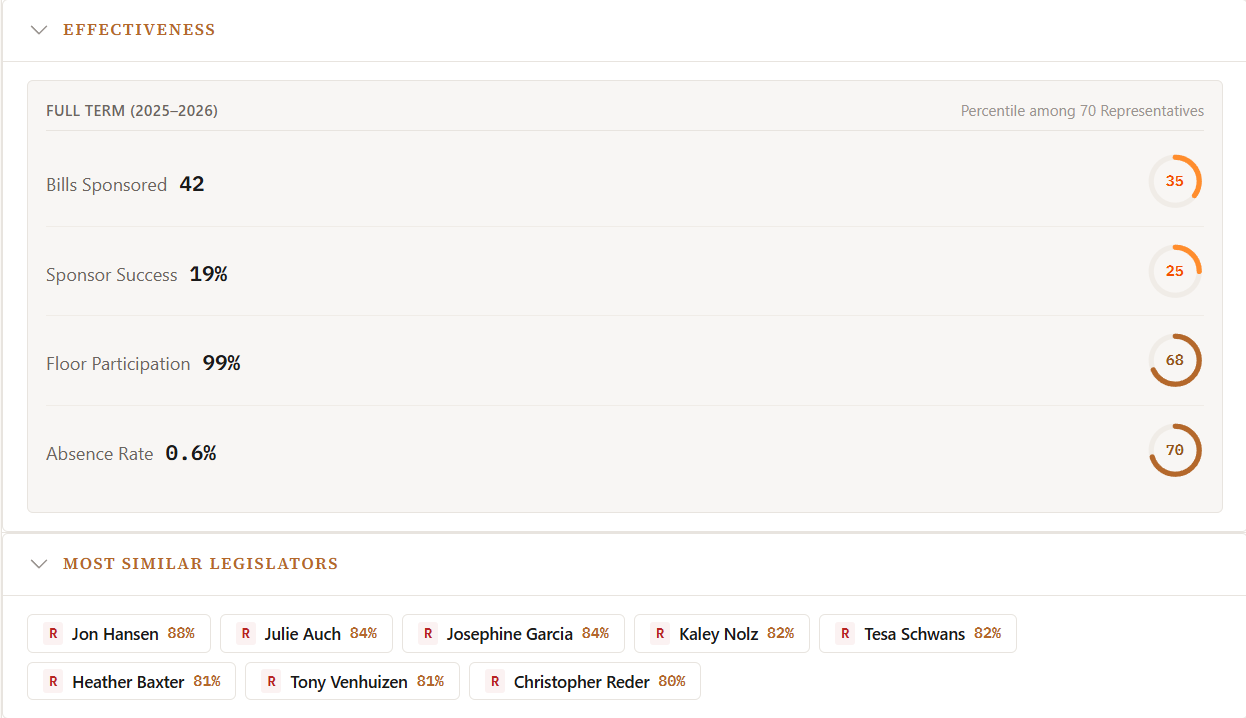
Profiles also include similar-legislator scores that reveal voting blocs and unexpected alliances, party loyalty rates, and a side-by-side comparison tool for any two members.
The budget, visualized
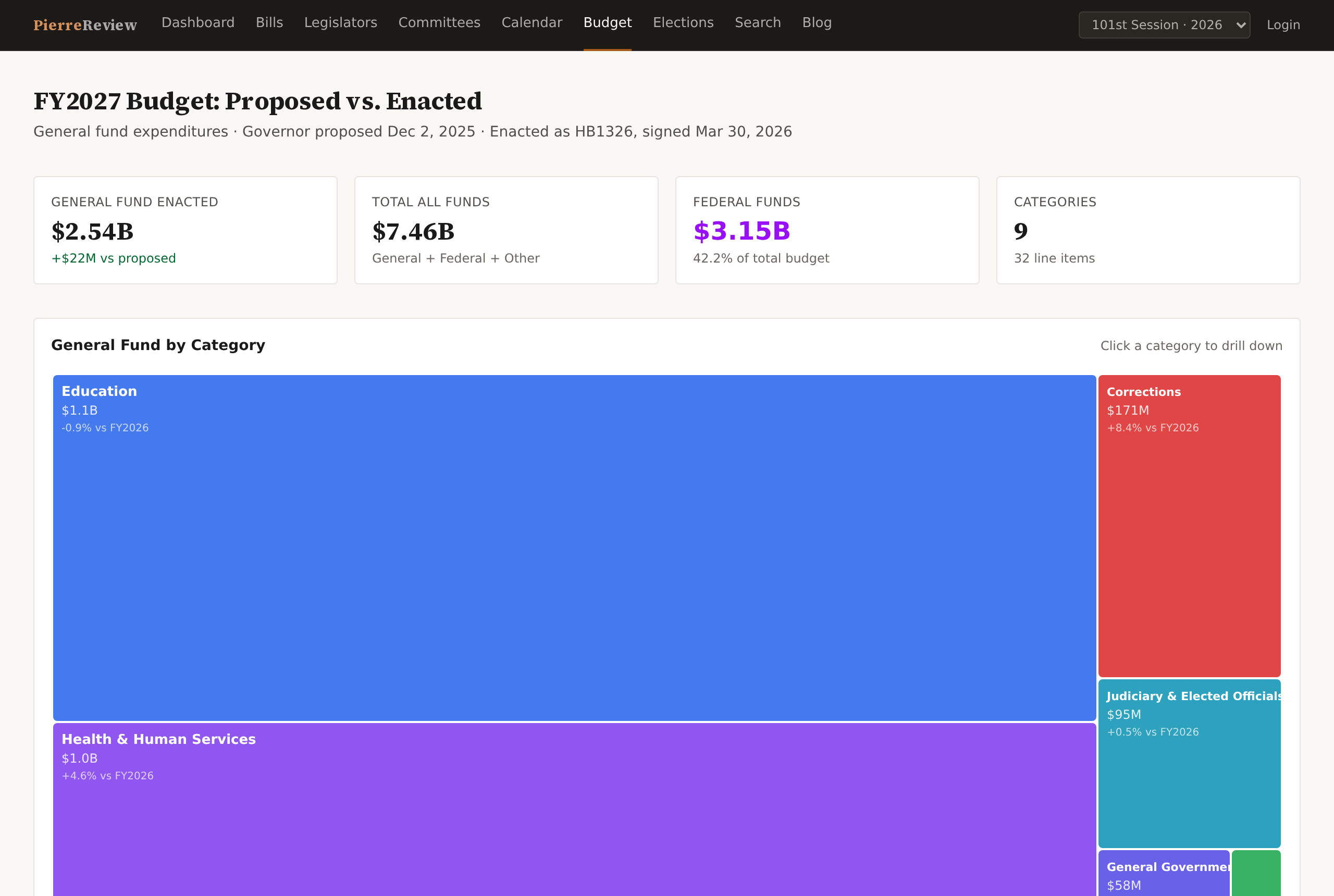
The budget explorer breaks down the state's $7.46B FY2027 budget — general fund, federal funds, and other funds — with the Governor's proposal tracked against what the legislature actually enacted, category by category. Special appropriations bills get their own layer, tied back to the legislators who sponsored them.
Interim coverage: the work between sessions
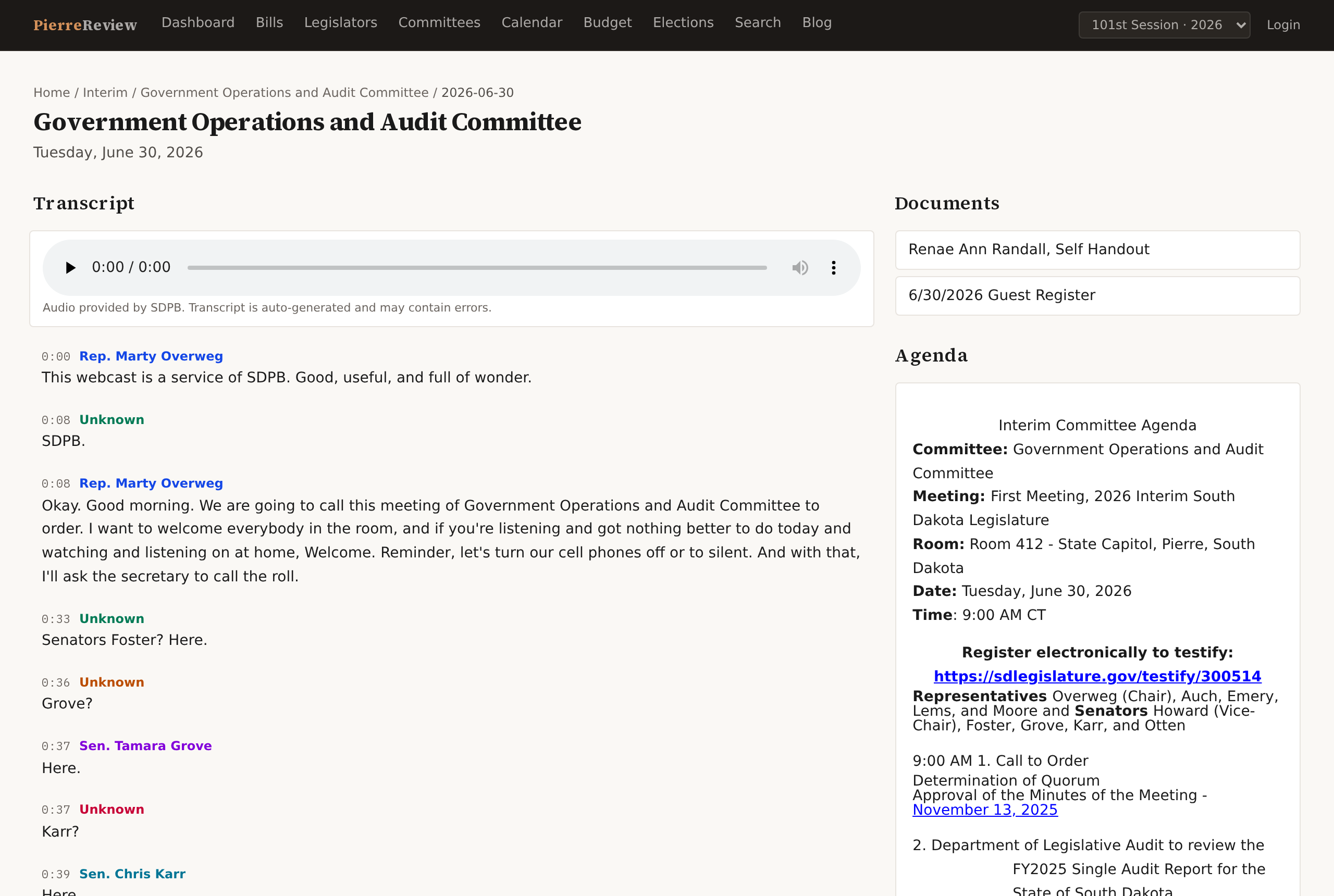
The legislature doesn't stop when session ends — interim committees study the issues that become next year's bills. We cover all 12 interim committees: meeting schedules, agendas, documents, and something nobody else offers — full, speaker-attributed transcripts of every meeting, synced to the official audio. Search what was said, see who said it, and jump to the exact moment in the recording.
What to expect when session is active
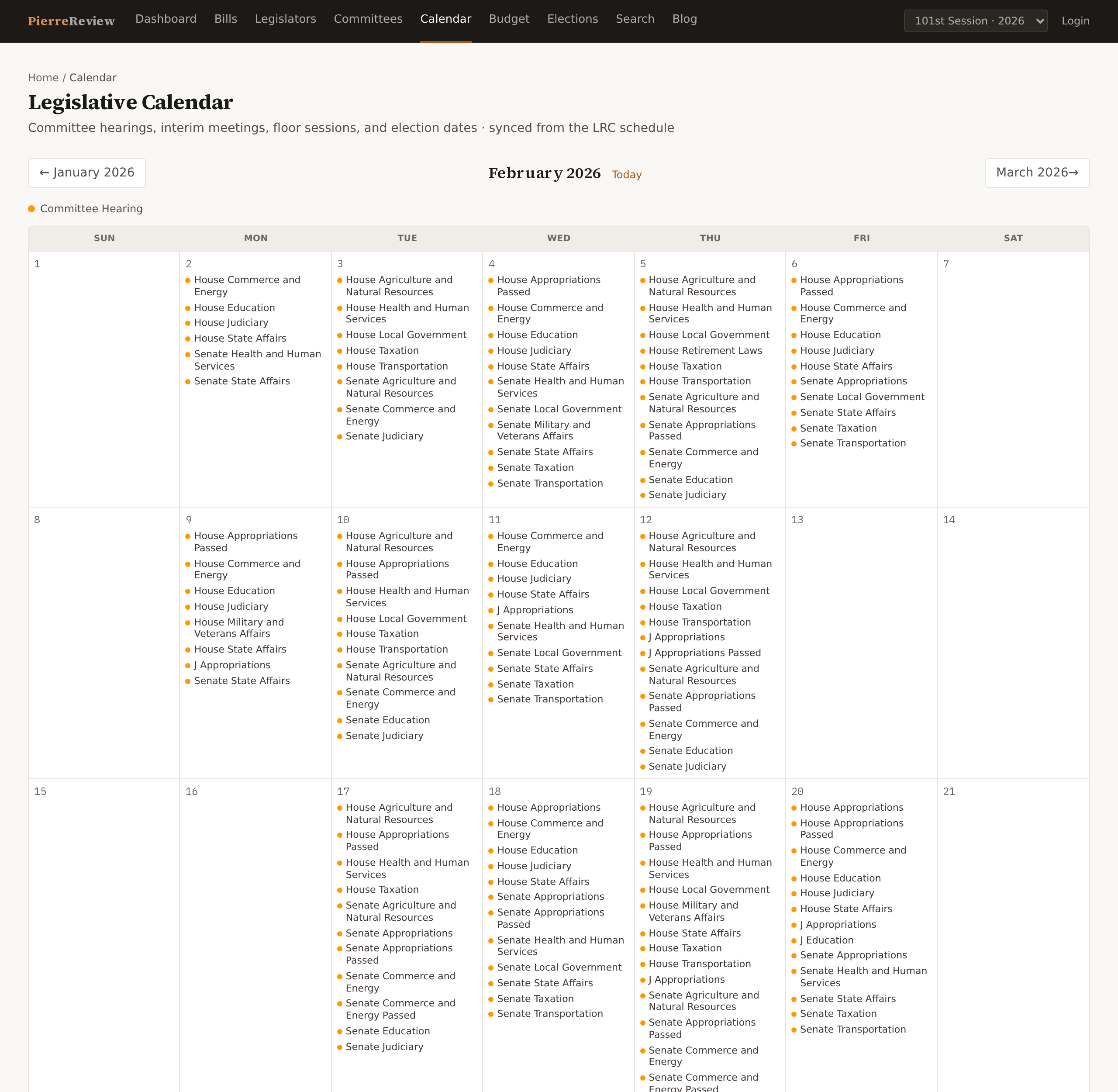
The 102nd Legislature convenes in January 2027, and that's when Pierre Review is at full throttle. Here's February of last session on the legislative calendar — a dozen-plus committee hearings a day, synced from the official LRC schedule:
During session, the data refreshes throughout the day:
- New bills appear with AI summaries within hours of introduction
- Roll-call votes, committee actions, and stage changes flow onto the board the same day
- Statute diffs regenerate as bills are amended, so you always see what the current version changes
- Stance and effectiveness scores update as votes accumulate
Workspaces: tracking for professionals
For subscribers who follow legislation for a living, the workspace adds the tools of a tracking service: watchlists organized by client or issue, per-bill positions and notes, individual bill tracking, and polished PDF reports you can hand to a client or a board. Organization accounts add shared watchlists, team roles, and seat management, so your whole shop works from one picture of the session.
Plans and pricing
Pierre Review is becoming a professional tool, and it now has professional plans:
Individual
$50/month
Full access for one person: every analytics feature, bill tracking, watchlists, and PDF reports. Start with a 7-day free trial — no commitment, cancel anytime.
Start your free trialOrganizations
Custom pricing
For lobbying firms, associations, agencies, and local governments: everything in Individual, plus team seats, shared watchlists, role-based access, and priority support.
Contact salesAbout us
Pierre Review is built by South Dakotans, for South Dakotans. We're committed to this project for the long haul, and subscriber feedback directly shapes what gets built next. Questions about plans, features, or anything else — reach us at [email protected].